Every June the same argument plays out in ranch kitchens across the state. The alfalfa is heading toward bloom, the grass in the meadow is starting to nod, and half of you wants to wait for the field to bulk up while the other half knows the clock is running. The pull toward tonnage is strong. You paid for the water, the fertilizer, and the diesel, and a heavy windrow feels like money in the barn.
The trouble is that the pounds you add by waiting aren’t the pounds a cow can use. Past a certain point the plant quits putting on leaf and starts building stem. Stem is fiber. Fiber fills a cow up before it feeds her, and the protein and energy she actually needs are sliding backward while the yield gauge climbs.
What you’re really trading when you wait
Think of a hay plant on two clocks. One clock is yield — how many tons you’ll roll off the field. The other is quality — how much protein and digestible energy sits in each of those tons. Early in the plant’s life both clocks run the same direction. Then they split. Yield keeps climbing for a while after quality has already turned the corner and started down.
In alfalfa, that turn shows up around the bud to early-bloom stage. Cut it in the bud and you’ll get a slightly lighter windrow, but it’ll be leafy, green, and high in protein. Let it get to full bloom and you’ll get more tonnage of coarse, stemmy hay that tests lower. The leaves are where the feed is, and a plant that’s putting energy into flowers and seed isn’t putting it into leaves.
Grass hay works the same way, just on a different marker. The stage to watch is the boot — that swollen point just before the seed head pushes out. Cut cool-season meadow grass in the boot to early head and you’ve caught it near its best. Wait until it’s fully headed out and going to seed and you’ve got bulk that a dry cow might get by on but that won’t do much for a heavy-milking cow or a growing calf.
None of this means cut as early as humanly possible. Cut alfalfa too green and too often and you wear the stand down over years. The point is to know where the sweet spot sits and aim for it, instead of letting the calendar and the weather make the call for you.
The weather gamble is the real problem
Here’s why so much Montana hay gets cut late: the window to cut at the right stage almost never lines up with a clean stretch of dry weather. You watch the alfalfa hit early bloom the same week a system rolls up out of the southwest, and now you’re choosing between mowing into a forecast or waiting it out and losing quality every day it stands.
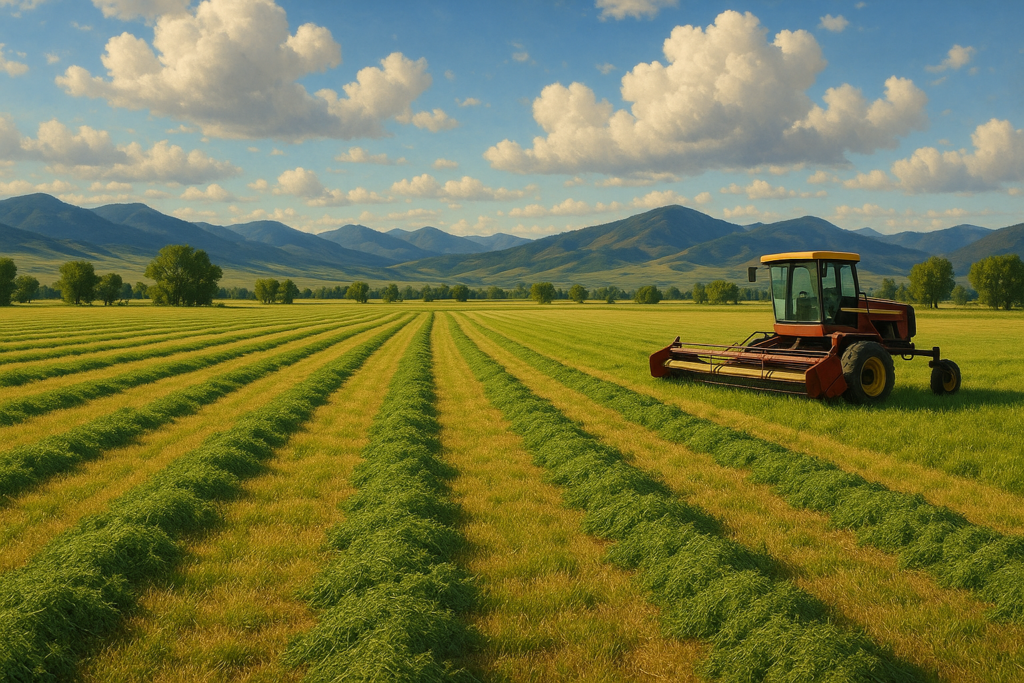
There’s no clean answer, but a few things tilt the odds. Cutting into a decent drying stretch even a little early usually beats waiting a week for perfect weather that never shows. Hay you can put up dry at bud stage is worth more than rained-on, over-mature hay that took another ten days. A wide swath dries faster than a narrow rope, so laying it out flat helps you use a short window. And if you run a conditioner, keep the rolls set so you’re cracking stems without shelling off leaves, because leaf loss on the ground undoes exactly the quality you cut early to keep.
Match the cut to who’s eating it
Not every acre has to be dairy-quality. Sort your fields in your head by who the hay is for. The alfalfa or good grass-legend mix that’ll go to fall-calving cows, replacement heifers, or anything you’re pushing for gain — cut that on time and protect the leaves. The rougher grass hay headed for dry cows in good body condition in midwinter can carry a little more maturity without hurting anything.
Leave enough stubble to let the stand recover, especially on alfalfa, where cutting too short and too often into fall stresses the crown going into a Montana winter. Three to four inches gives the plant something to work with and helps hold soil moisture for the next cutting.
When you’re standing at the edge of the field trying to decide, remember what late, stemmy hay actually costs. It isn’t just a lower test on a piece of paper. It’s the protein tub, the range cake, or the sack of supplement you’ll haul out in January to make up the difference — feed you’d have grown for free if you’d dropped the swather a week sooner.