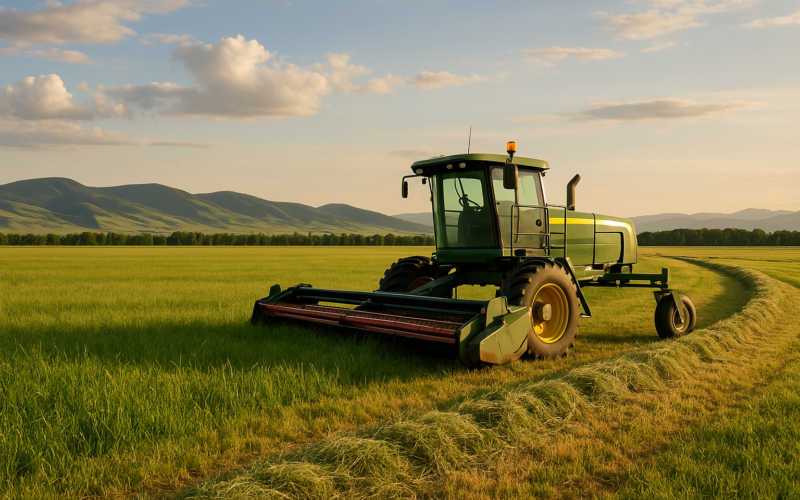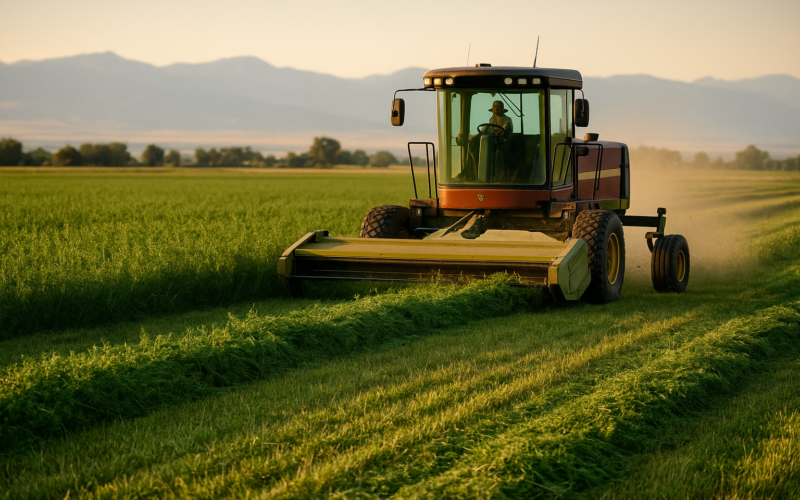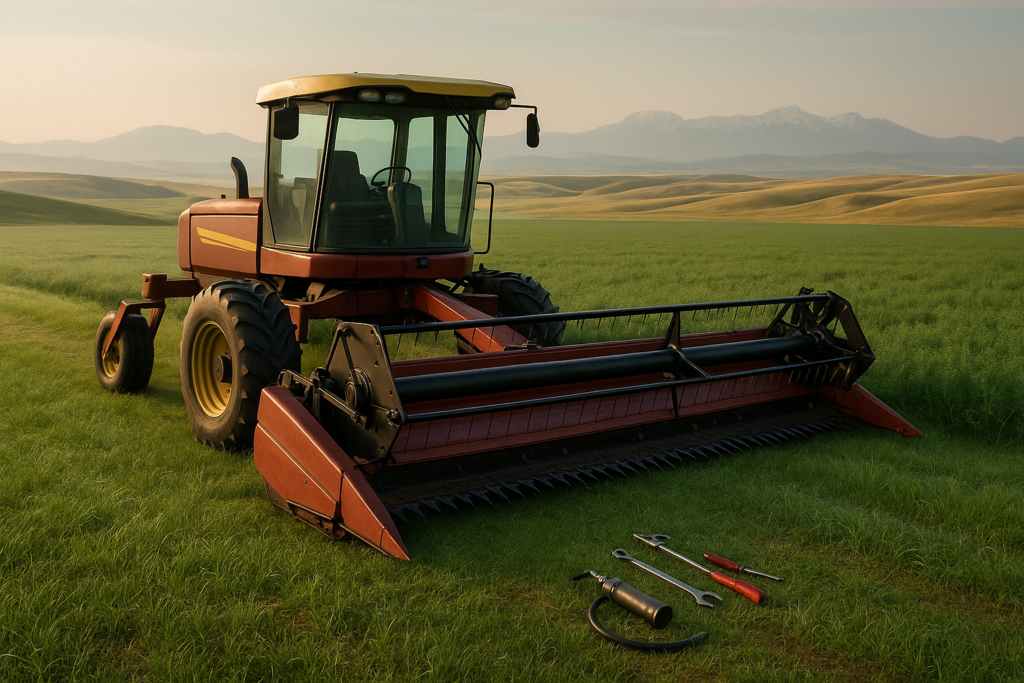
First cutting doesn’t wait on you. When the alfalfa hits bud and the timothy heads out, you’ve got a window measured in days, and a machine that quits in the middle of it turns a two-day job into a week. Most of the breakdowns that stop a swather or a baler cold are the ones you could have caught in the shop with the doors open and a light on, back when you had time to fix them right.
Mid-June is that time. The hay is close but not on you yet. Here’s where the hours pay for themselves.
The header is where the money is lost
On a mower-conditioner or a sickle swather, run the guards and sections before you ever pull into the field. A section with a rounded edge or a chipped serration doesn’t cut, it tears and pushes, and you can see it in the windrow — ragged stubble and stems laid every direction. Replace the bad ones now instead of standing in a hot field with the wrenches. Check the hold-down clips and the wear plates while you’re at it. A sickle that’s loose in the guards pounds itself apart and takes the wobble box with it.
Disc headers have their own list. Look at the knives and the mounting hardware, and turn each disc by hand to feel for a bad bearing or a module that’s rough. A disc module that lets go at speed is an expensive noise. Check the oil in the cutterbar and look for weeping seals. On a conditioner, set the roll tension and timing to the crop — tighter on stemmy alfalfa to crimp it, backed off on light grass so you’re not knocking leaf onto the ground.
The baler earns its keep on the knots
A round baler that won’t tie or a small square that misses knots will test your vocabulary faster than anything on the place. Pull the knotters apart, clean the packed hay and dust out of them, and look at the twine discs and the knife. Old, brittle twine and a dull knotter knife go together, and a bird’s-nest of missed knots at the tailgate wastes twine and time both.
- Check every belt on a round baler for cracks and frayed lacing, and get the tracking right so a belt doesn’t walk off and shred.
- Grease everything the book tells you to, then find the zerks the book forgot. Pickup bearings and roller bearings are cheap compared to what a seized one does downstream.
- Run the pickup teeth — a row of broken teeth leaves hay on the ground, and that’s feed you cut and paid for.
- Set your bale density and check the twine or net-wrap count so a bale doesn’t come out soft and slump in the stack.
Air up the tires and look at them honestly. A baler tire that’s been sitting checked and dry-rotted since last August will blow on a rocky field road, usually loaded.
A dry field and a hot machine burn
Montana puts up a lot of hay in country that’s already tinder by July, and equipment fires start more of them than lightning does. A wrapped bearing throws sparks. A dragging brake glows. Chaff and leaf pack up around the exhaust and the hot engine parts on a swather and smolder until it finds air. Blow the machine off with a compressor at the end of every day, not just when you think of it. Keep a charged extinguisher on the swather and another on the tractor, and make it a big one — a little kitchen unit won’t touch a baler full of dry hay.
Watch the calendar too. Cutting in the heat of a dead-still afternoon is asking for it if the humidity’s low and there’s cured grass in the ditches. A lot of the worst field fires start when a machine is worked hard in the hottest, driest part of the day.
None of this is complicated. It’s an afternoon with a grease gun, a box of sickle sections, and a hard look at the belts and bearings. Do it before the hay is ready and you spend cutting season cutting hay instead of chasing parts to town. Skip it and the field will find every shortcut you took, usually on the best drying day of the week.