The pressure in June is to get the first cutting off the ground. A thunderhead is building over the Bridgers, the forecast turned on you, and there’s a windrow that isn’t quite ready but you bale it anyway because the alternative is watching it rain. Everybody who’s put up hay has made that call. The trouble is that hay doesn’t stop changing once it’s in a bale. Pack too much moisture into a tight bale and it keeps living, and what it does next is generate heat.
Freshly cut forage is still respiring. Plant cells burn sugars, and bacteria and mold go to work on the wet stems. All of that throws off heat. In a bale dried down properly, there isn’t enough moisture to feed the process and it stalls out. Above roughly 18 to 20 percent for small squares and big rounds, and higher yet for a tight large square, the reactions run long enough to cook the middle of the stack. You lose protein and digestibility to it before you ever worry about a fire. Heat-damaged hay turns brown and smells like tobacco or caramel, and while cattle will often eat it, the protein bound up in that browning is protein they can’t use.
How the heat climbs
The first several weeks after baling are when a wet stack does its worst. Internal temperature ramps over the first few days, and where it settles tells you how much trouble you’re in. Hay that levels off in the low 100s is normal and will come back down. Push into the 130s and 140s and you’re losing feed quality fast and the stack needs watching. Above 150 you have a problem that can run away from you, because at high temperature a different chemistry takes over that produces its own heat and can carry a stack toward ignition without any outside spark.
The reason hay fires surprise people is the delay. A bale stacked green in mid-June can smolder along inside for a month or more, and the flames show up in July or August when you’d swear the danger was long past. By then the outside of the stack looks fine. The core is where it’s happening.
Checking a stack you’re not sure about
If you baled something wetter than you liked, don’t just wait and hope. Drive a temperature probe into the stack, or make one from a piece of pipe you can drop a thermometer down on a string. Check the biggest, tightest bales and the center of the stack, because that’s where heat has nowhere to go. Check every day for the first couple of weeks on hay you’re worried about.
A few signs are worth knowing before you climb up on a stack that’s been heating:
- A sharp, sweet, burnt-sugar or tobacco smell coming off the pile.
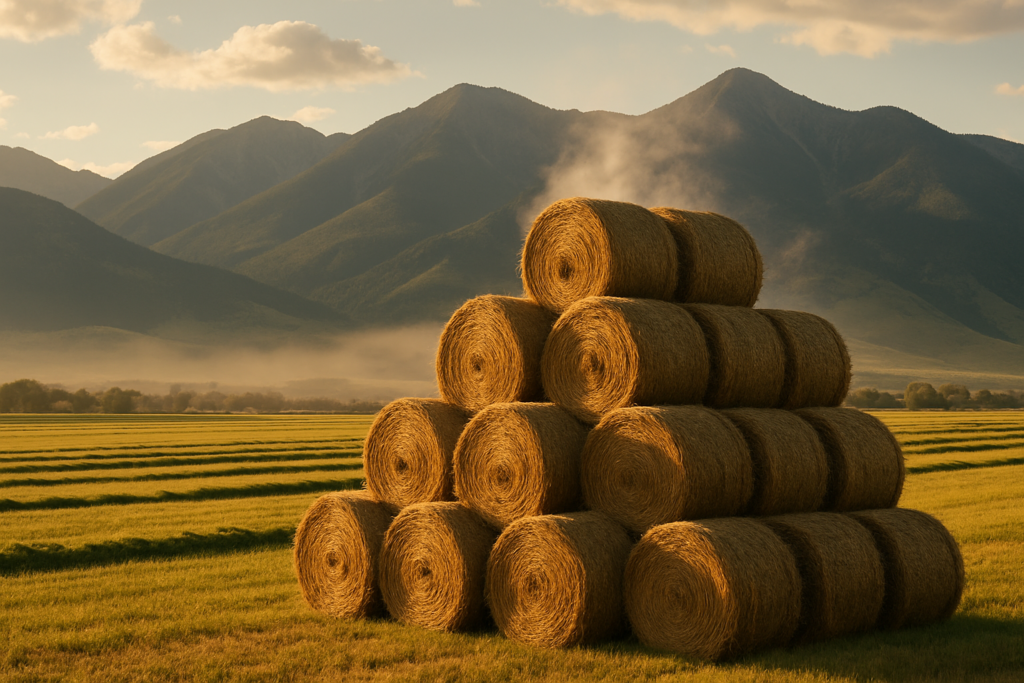
- Steam or vapor rising in the cool of the morning.
- Slick or damp spots on bales, or visible mold.
- Temperatures that keep climbing day over day instead of leveling off.
If a probe reads up around 175 or higher, be careful how you handle it. Pulling bales apart lets oxygen into a pocket that’s near ignition, and stacks have flared up the moment someone opened them. Don’t walk out across the top of a hot stack either; fire can burn out the center and leave a crust you’ll drop through. That’s the point to have the fire department on the way before you start moving anything, and to keep water close.
Getting ahead of it in the field
The fix is mostly made before the baler ever runs. Give the windrow the time it needs, and check moisture with a tester instead of guessing by feel, because a stem that snaps clean on top can still be tough down in the shade of the windrow. Baling early morning or late evening off the dew works for softening leaf loss on alfalfa, but that same tough, damp feel means moisture going into the bale, so know which you’re chasing.
When the weather won’t cooperate, a preservative like buffered propionic acid lets you bale a few points wetter without the stack heating, and it’s cheaper than losing the hay. For anything you baled on the tough side, stack it loose with air space rather than jamming it wall to wall, and keep it separate and away from the good hay and the buildings until you’re sure it has settled. Hay is the most expensive thing on a lot of Montana outfits by the time it’s stacked. It’s a poor trade to lose it, or a shed, to a rain shower you tried to beat by an afternoon.