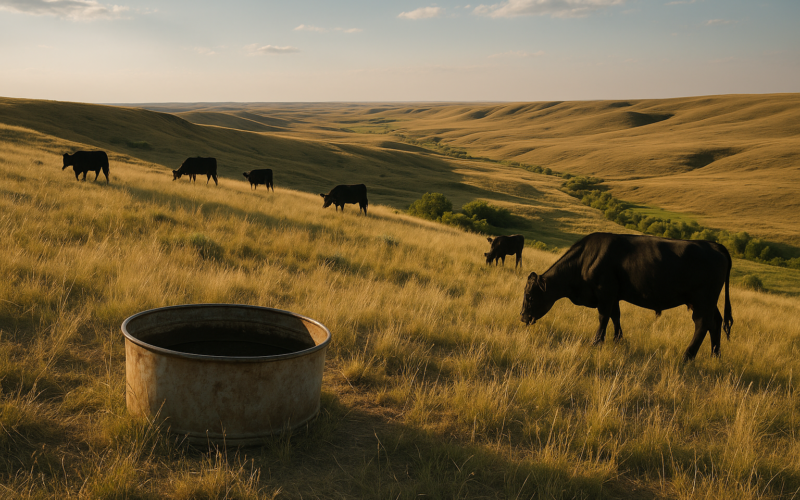
The knapweed you notice at 60 miles an hour on the county road looks like a nuisance. Give it three or four summers of ignoring it and it’s a stand thick enough to crowd out the bunchgrass a cow actually wants. Mid-June is when a lot of Montana’s worst rangeland weeds are growing hard and haven’t set seed yet, which is exactly when your spray dollar goes the furthest. Miss this stretch and you’re either paying more later or waiting until fall to catch the regrowth.
The three that give most producers fits west of the Divide and along the river bottoms are spotted knapweed, leafy spurge, and Canada thistle. Each one behaves a little differently, but the theme is the same: hit it before the seed matures, and hit it while the plant is still moving sugars around and will pull herbicide down into the root.
Know what you’re looking at before you fill the tank
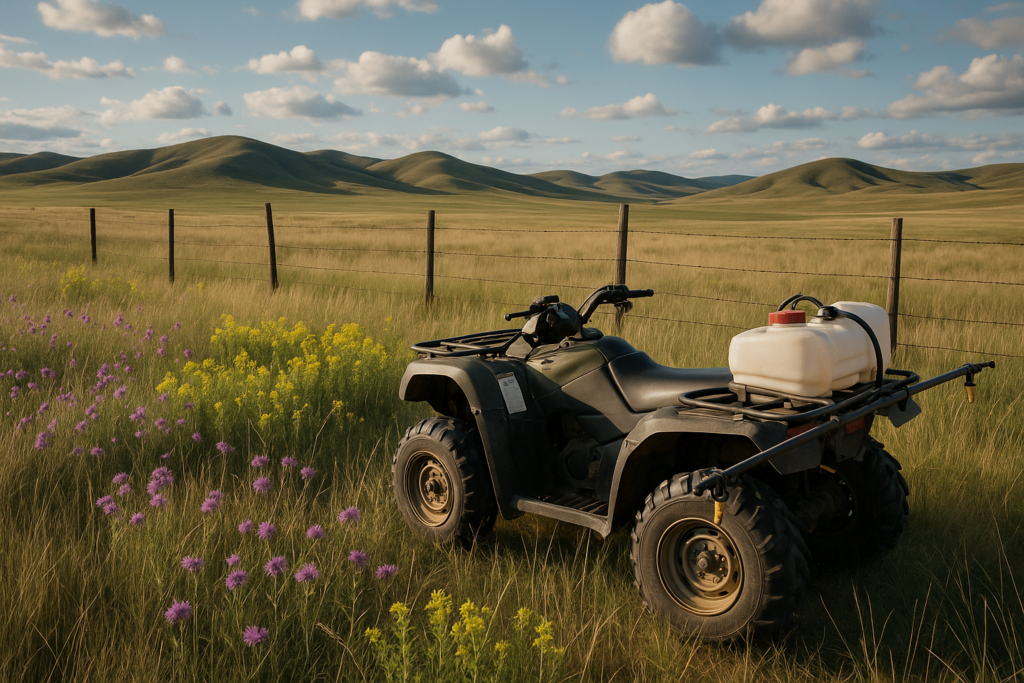
Spotted knapweed shows a low rosette early, then bolts into a wiry plant with pinkish-purple flowers. Right now, in June, a lot of it is in the bolting stage, which is a good time to spray because the plant is actively growing and the flowers haven’t opened to set seed. A single mature knapweed plant throws thousands of seeds, and those seeds sit viable in the soil for years. That’s why a patch you think you cleaned up keeps coming back.
Leafy spurge is the mean one. It’s got a yellow-green flower bract that shows early summer, and a root system that can run several feet deep and sideways. You will not dig it out and you will not spray it out in one pass. Spurge control is a multi-year job, and the two windows that matter are the true-flower stage in early summer and again in fall when the plant is pulling reserves down into the root. If you only get one shot at it, fall regrowth often gives better root kill, but knocking it back now keeps it from seeding.
Canada thistle spreads by creeping roots as much as by seed, so mowing a patch just moves the problem. It responds best to herbicide at the bud-to-early-bloom stage and again in the fall rosette stage.
Timing and the little things that wreck a good spray
Growing conditions matter as much as the calendar. Herbicide works best on a plant that’s actively growing with decent soil moisture. Spray a drought-stressed, dusty plant in the heat of a July afternoon and you’ll waste chemical. Early morning or evening, when it’s not blistering hot and the wind lays down, is your friend. Watch the wind for drift, especially if you’ve got a hay field, a garden, or a shelterbelt of susceptible trees downwind. Some of the broadleaf chemistry that hammers knapweed will also nail your neighbor’s alfalfa or a stand of cottonwoods.
Read the label on grazing and haying restrictions. Several common rangeland herbicides carry a waiting period before you can cut hay off treated ground or, in some cases, before certain classes of livestock graze it. If you’re spraying pasture you plan to turn cows into next month, that restriction is not fine print you skip.
Calibrate your sprayer. A four-wheeler boom or a backpack that’s putting out the wrong rate either wastes product or under-doses the weed so it survives to seed. Clean the tank out afterward too, especially if you’re going from a broadleaf herbicide to spraying something near a crop.
Walk the ground the seeds ride in on
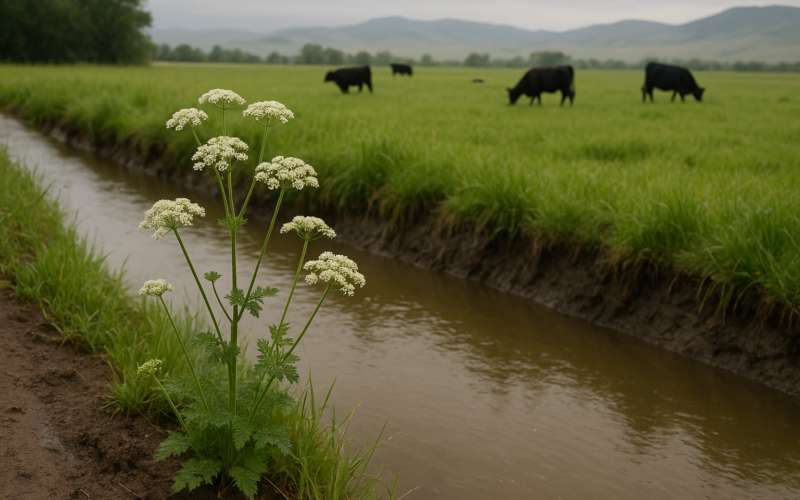
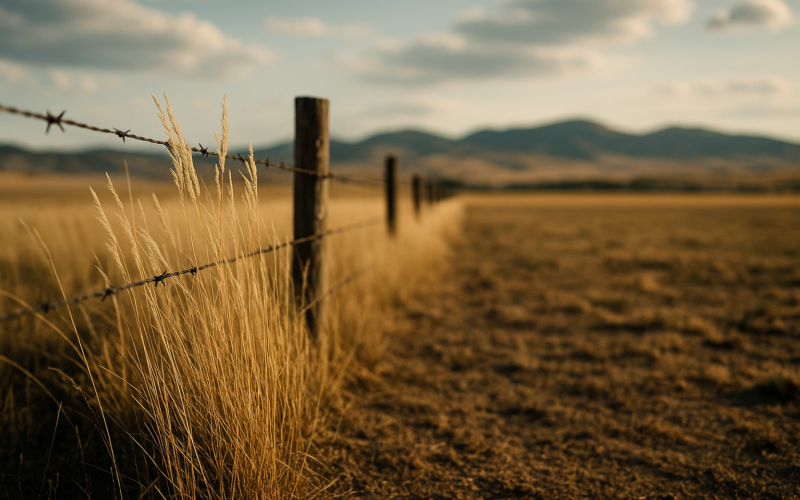
Weeds don’t parachute in from nowhere. They come up the road ditch, off the neighbor’s fenceline, out of a load of cheap hay, or in the mud packed in a truck tire and the hooves of cattle that grazed an infested pasture. The highest-payback thing you can do in June isn’t the spraying, it’s the scouting. Walk or ride your fencelines, your gates, your water gaps, your corrals and stack yards, and the trails cattle beat down. That’s where new patches show up first, small enough to spot-treat with a backpack instead of a boom.
Catching a spurge patch when it’s the size of a pickup box is a ten-minute job. Catching it when it’s covered half a hillside is a chemical bill and a couple of summers of your life. County weed districts can help with identification and often cost-share on management, and a lot of them will tell you what’s working in your particular corner of the state.
The math on weeds is patient and unforgiving. A pasture that’s fully green in June can still be losing carrying capacity a little every year to plants a cow won’t touch. Spend a few evenings this month with a sprayer and a good pair of boots, and you’re buying back grass you’d otherwise be renting or feeding your way around by August.