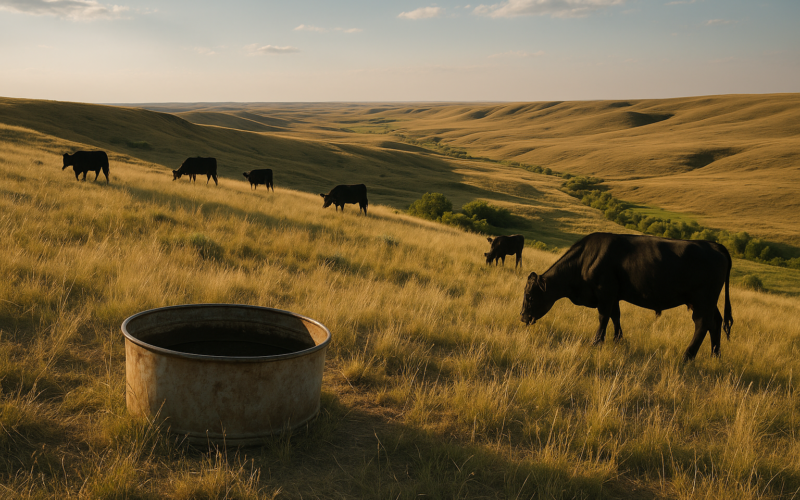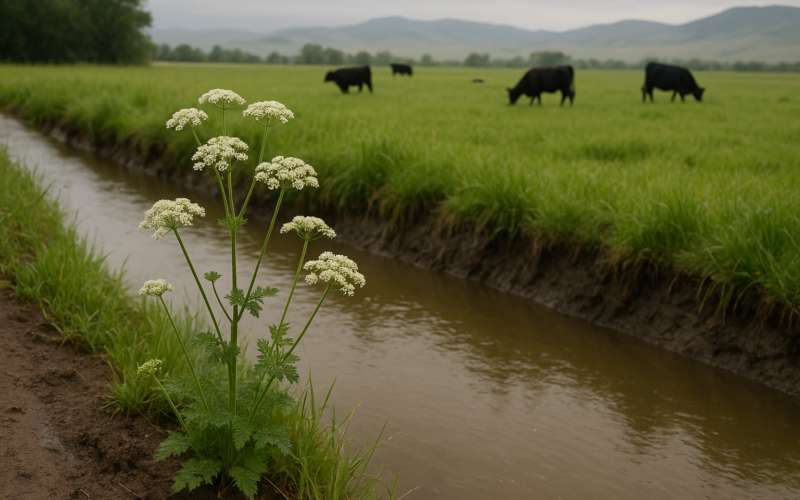
Most noxious weed problems on Montana range start small enough to ignore. A yellow-green patch of leafy spurge no bigger than a pickup box down in a coulee. A few purple knapweed heads along the field road. You drive past it in May, and by the time it bothers you it has doubled, then doubled again. Spurge spreads by seed that pops out of the pod and by roots that run laterally, and an established colony can push out several feet in every direction in a single year. Knapweed does it with seed, a lot of seed, and a taproot that shrugs off drought better than the grass it replaces.
June is when both plants stop hiding. The spurge lights up with its yellow-green bracts, and the knapweed bolts and starts showing color. That’s inconvenient, because you’re branding, haying, and moving cows, but it’s also the point in the season when you can actually find every patch and put something on it that works.
Time the herbicide to the plant, not the calendar
Leafy spurge takes herbicide best when it’s moving sugars down to the root, and true-flower stage in June is one of those windows. The fall regrowth after a frost is the other. Spraying a mature spurge patch at flowering, then coming back in the fall, does more than one heavy hit ever will, because you’re catching the root system twice in the same season. One pass and done almost never cleans up spurge. Plan on treating the same ground three or four years running and expect it to try to come back.
Spotted knapweed is more forgiving on timing. It’ll take a broadleaf herbicide at the rosette stage in spring, again at bud-to-bloom, and hard in the fall when the rosettes are storing up for winter. What you want to beat is seed set. Once those purple heads dry and shatter, you’re banking seed in the soil for a decade. If you only get one trip across a knapweed pasture, make it before the plants finish blooming.
Read the label on grazing and haying restrictions before you spray anything near where cattle are or where you’ll cut. Some products keep you out for a set number of days; a few carry restrictions on manure and hay that matter if you’re selling feed. And spurge sap will blister a cow’s mouth, so cattle mostly won’t touch it anyway, which is exactly why it takes over a pasture and leaves the grass grazed flat.
Let the beetles do the miles you can’t
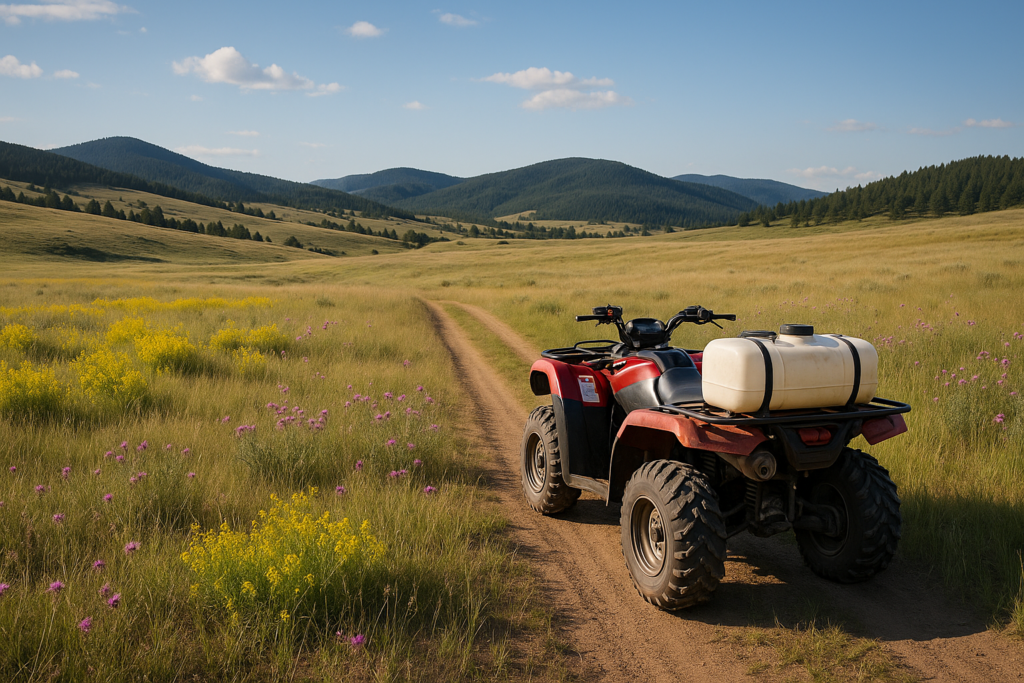
Spraying works on a patch you can reach with a truck or an ATV. It doesn’t work on forty acres of broken foothill spurge you can’t get a sprayer into. That’s where flea beetles earn their keep. The little brown Aphthona beetles feed on spurge roots as larvae and on the foliage as adults, and once a colony establishes they’ll knock a dense stand down to scattered plants over several years. They won’t wipe it out, but they’ll hold ground you have no other way to reach.
Knapweed has its own bugs, seedhead weevils and root weevils that have spread across a lot of western Montana on their own. They take the edge off but rarely finish the job. Biocontrol and herbicide aren’t either-or. Spray the accessible edges and the road spread where you can keep seed from moving, and turn the beetles loose on the country you can’t.
Stop the spread before you stop the patch
Most new infestations arrive on something that moves. Knapweed seed rides in on a hay bale, in the tread of a tire, in the belly wool of a cow you brought in. Buying certified weed-free hay is cheaper than fighting a new stand for ten years. Washing down equipment before it comes off infested ground, and keeping an eye on the disturbed dirt along new fence lines and cattle trails, does more than any herbicide once the weeds are established.
Grass is the best weed control there is. A pasture that’s grazed with some rest, not hammered flat every summer, keeps a canopy that crowds knapweed seedlings before they get started. Weeds move into bare ground and overgrazed range first. The patch you spray this June is a lot smaller if the grass around it is healthy enough to fight back.