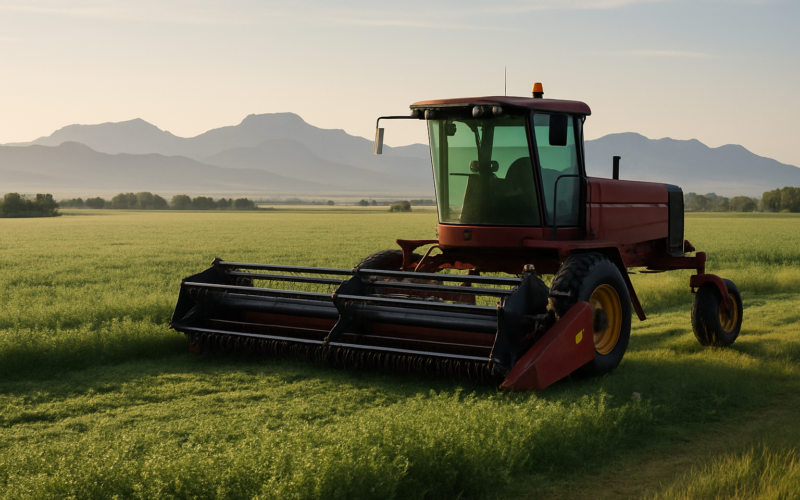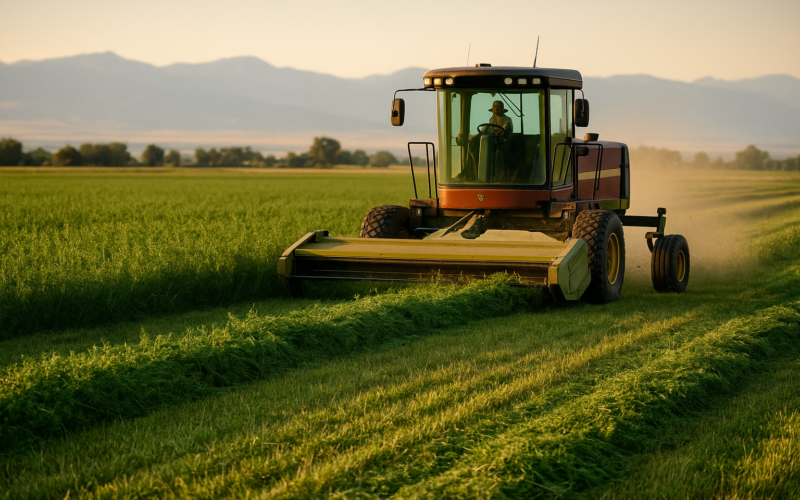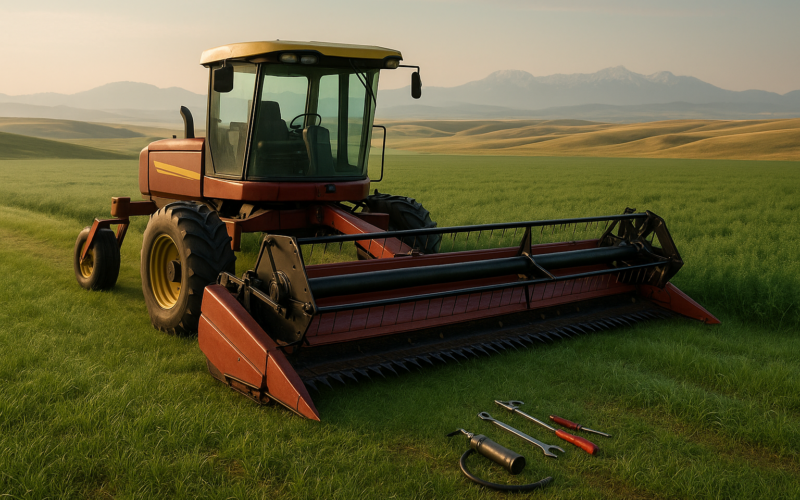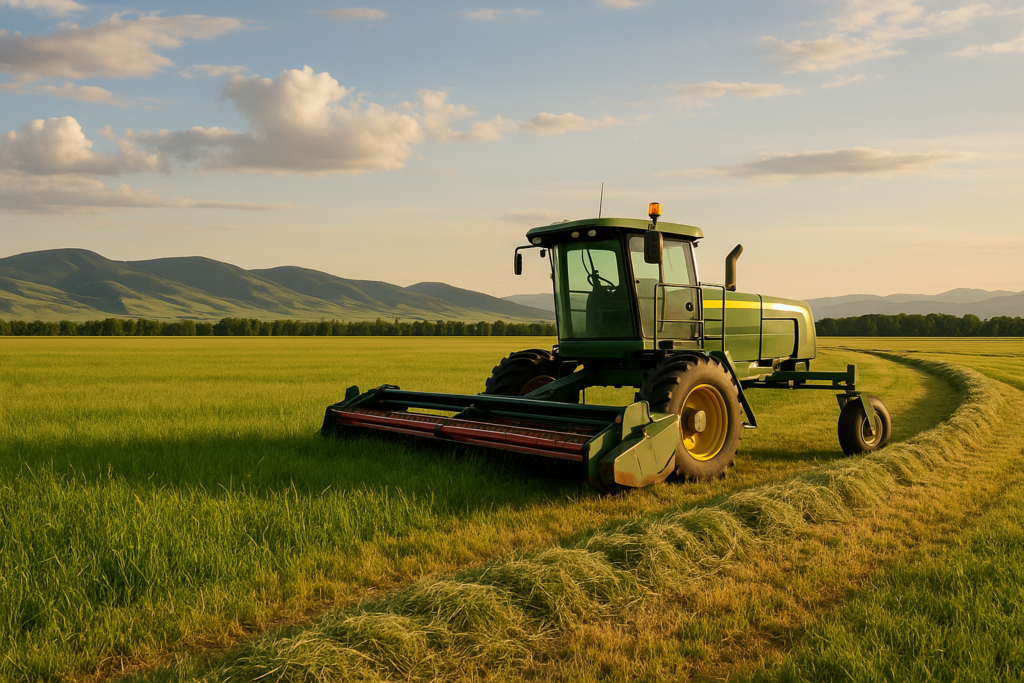
Hay season lives and dies on weather windows. When you get three clear days with no dew and a little wind, you cut, you rake, and you bale, and you do not want to be crawling under the swather at nine in the morning wondering why the sickle is riding rough. Most of the breakdowns that eat a good stretch of weather in June are the ones you could have caught in the shop in May. The machine sat all winter, mice got into it, and the last thing you did last September was park it dirty and walk away.
Here is the stuff worth going over before the header ever hits the field, because once the grass is down you’re committed and the clock is running.
The swather: sickle, guards, and everything that cuts
Pull the sickle and look at it before you trust it. Worn sections that have gone round on the leading edge don’t shear the stem, they tear it, and a torn stem takes longer to cure and leaves a ragged stubble that regrows slow. Broken sections and cracked guards let hay slip through instead of getting cut, and you’ll see the miss as strings of standing grass in the windrow. Replacing a handful of sections and a couple of ledger plates in the shop costs you an evening. Doing it in the field with the sun climbing costs you a cutting day.
Check the hold-down clips and the wear plates that keep the sickle riding tight against the guards. Too much clearance and the knife just pushes grass around. Grease the wobble box or pitman drive and listen for a bad bearing while you’ve got time to order the part. If you run a disc header, look at the mower knives and the shear points, and make sure the modules aren’t seeping oil onto your windrow.
Don’t forget the conditioner rolls or flails. That’s what cracks the stem so alfalfa dries evenly and doesn’t leave you with dry leaves and green stems in the same bale. Rolls that are pitted or set too loose don’t do the job, and full-bloom-heavy alfalfa is unforgiving about it.
The baler: belts, bearings, and the knotter nobody understands
Round or square, the belts and chains want a look. On a round baler, check belt tension and lacing and watch for belts that track off to one side, because a belt that wanders eventually shreds itself in the middle of a field. Grease every zerk on the pickup and the rollers. A dry bearing on a hot afternoon smokes and then it seizes, and now you’re waiting on a part with hay curing past its window.
The square baler knotter is where most guys lose their patience. A knotter that tied clean when you shut down last fall can tie half a bale and miss the rest by June, usually because of old twine buildup, a worn twine disc or knife, or a bird’s-nest tension that drifted over the winter. Before you cut, run a few bales in a spot you don’t mind and watch the knots. If it’s dropping loose or slipping the wrap, clean the whole knotter, check the twine finger timing, and make sure the twine is running through the tensioners the way the manual shows. Set your twine tension by the book, not by feel. And use decent twine while you’re at it. Cheap twine that fuzzes up plugs the knotter faster than anything.
Small stuff that stops a big machine
Top off the sickle grease and the driveline zerks, but also chase the little failures that leave you stranded. Rodents chew wiring harnesses over the winter, so check your lights and monitor plugs. Blow the chaff out of the engine bay on a self-propelled swather before it packs against a hot manifold; more than one machine has burned in the field from a plugged screen and dry grass. Carry spare sickle sections, a few knotter parts, belt lacing, and the tools to change them in the field, because a fifteen-minute fix beats a two-hour trip to town.
None of this is complicated. It’s just the difference between cutting when the weather says cut and standing in the shop while the window closes on you. First cutting sets the tone for the whole hay year. Get the iron ready before the grass is down.