When Yellowstone settles into winter, the park changes character in a hurry. Roads close, steam rises off thermal basins, and the crowds thin to a fraction of summer levels. For Montanans who hunt, fish, ranch, or just like to keep tabs on what’s happening along our southern border, that winter shift matters. It influences where animals concentrate, how they move near the boundary, and what kind of conditions you can expect if you’re traveling in the Gardiner, West Yellowstone, or Cooke City corridors.
Quick takeaways
- Winter concentrates wildlife in lower-elevation valleys and along plowed routes, which can improve viewing but also increases stress on animals.
- Travel is the limiting factor: road closures, blowing snow, and icy stretches can turn a simple day trip into a serious undertaking.
- Boundary areas stay dynamic: elk, bison, and wolves may shift in response to snow depth, forage, and human activity.
- Give animals space, especially in deep cold—energy budgets are tight and disturbance can have real consequences.
- Plan around regulations if you’re recreating near the park line; rules can change by unit, season, and species.
Yellowstone in winter: quiet, bright, and hard on animals
Winter in Yellowstone can look almost unreal: hoarfrost on sage, low-angle sun on snowfields, and geyser steam hanging in still air. That beauty is real—but so is the strain winter puts on wildlife. Cold temperatures and deep snow raise the cost of moving and finding food. Many animals respond by using packed trails, windblown ridges, and lower-elevation flats where forage is more accessible.
For visitors, that can mean more predictable viewing opportunities. For the animals, it can mean they’re operating with little margin. A single push—people getting too close for a photo, snowmobiles or vehicles pressuring animals off a packed route—can force extra movement that burns calories they can’t easily replace.
Where you’re likely to see wildlife (and why it shifts)
Reports and long-time winter patterns indicate that wildlife sightings often cluster along the park’s plowed winter routes and in broad valleys where travel is easier. In and around the northern range, that can include elk groups using open slopes and river bottoms, coyotes and foxes hunting the edges, and wolves traveling long distances on packed surfaces.
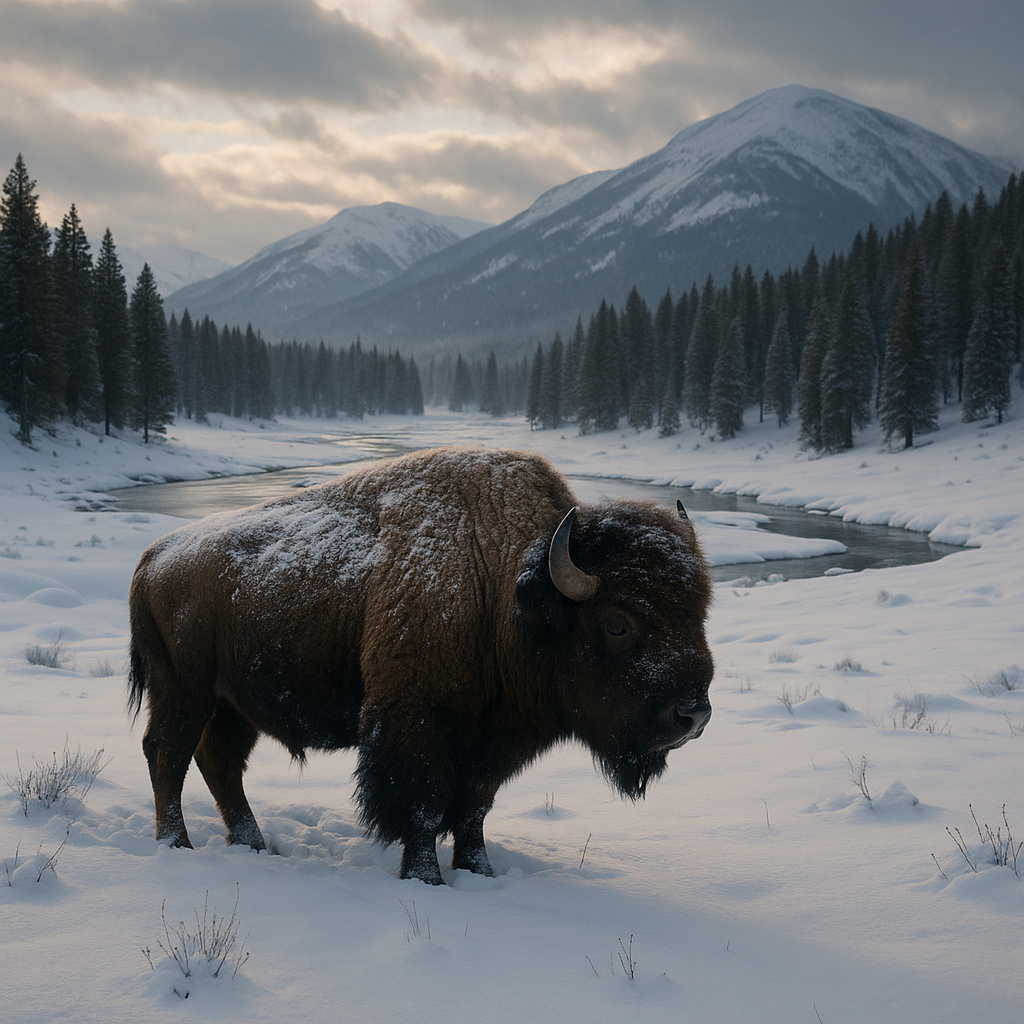
Bison may appear in large numbers in certain corridors depending on snow depth and forage availability. Their movements can change quickly with weather: a warm spell can crust the snow, a storm can bury grass, and a cold snap can lock everything down again.
- Elk: often seek windswept areas and lower elevations; may use roads and packed trails.
- Bison: can push through deep snow but still favor easier travel when available; large groups may form.
- Wolves: commonly travel efficiently on packed routes; sightings can spike when visibility is good.
- Pronghorn, deer, and bighorns: distribution depends heavily on snow depth and exposed forage.
If you’re viewing wildlife, bring optics, stay patient, and keep your distance. Yellowstone and Montana both emphasize giving animals room—especially in winter when survival is a daily math problem.
Winter access: know what’s open, and what it takes
In winter, Yellowstone’s access is fundamentally different than summer. Many interior roads are closed to regular vehicle travel. Some routes are managed for oversnow travel (snowcoaches and, depending on current policy and conditions, snowmobiles), while the North Entrance area around Gardiner typically provides the most consistent wheeled-vehicle access into the park during winter months.
Before you go, check official updates for road status, closures, and travel advisories. Start with the National Park Service’s Yellowstone road information page: https://www.nps.gov/yell/planyourvisit/conditions.htm.
Even outside the park, the approach roads can be the real challenge. The Paradise Valley can be clear one hour and slick the next; the canyon stretches toward Cooke City can stack up snow and wind; and the West Yellowstone area can see fast-changing conditions. If you’re towing, hauling, or traveling early/late, build in time and bring what you’d bring for a Montana winter breakdown: warm layers, shovel, traction aids, food/water, and a way to communicate if cell service drops.
Photography and wildlife watching: do it the Montana way
Winter is when many folks want that “postcard” shot—steam, snow, and an animal framed in the light. The problem is that winter also tempts people to close distance because it feels quieter and more open. In reality, animals are often closer to roads and packed routes because that’s where travel is easiest.
A few common-sense practices go a long way:
- Use a long lens or spotting scope rather than walking closer.
- Don’t approach animals on roads—they may be using the packed surface to save energy.
- Never crowd bison; they can move fast on snow and can be unpredictable.
- Keep dogs leashed where allowed and avoid letting pets harass wildlife outside the park boundary.
- Let the animal dictate the distance: if it changes behavior because of you, you’re too close.
What this means for Montana
Yellowstone isn’t just a destination—it’s a neighbor. Winter conditions inside the park can ripple into Montana in a few practical ways.
1) Boundary-area wildlife movement can change quickly. As snow stacks up, elk and bison may concentrate in more accessible areas. That can increase sightings near Gardiner and along the Yellowstone River corridor. It can also raise the odds of animals crossing the boundary in search of forage or easier travel, depending on weather and pressure.
2) Ranchers and landowners may see more wildlife interactions. When forage is limited, animals may be drawn to lower elevations and open ground. That can mean more fence crossings, more roadway conflicts, and more attention needed around hay yards and winter pasture. If you’re in a boundary community, staying ahead of gate closures, fence repairs, and livestock monitoring can prevent problems when wildlife numbers spike.
3) Hunters should stay current on district-specific rules. Montana’s hunting regulations vary by species and hunting district, and boundary-area management can be especially nuanced. If you’re hunting near the park line, confirm season dates, legal weapon restrictions, access rules, and any special provisions before you go. Start with Montana Fish, Wildlife & Parks: https://fwp.mt.gov/.
4) Winter recreation pressure can concentrate, too. When some routes are closed, everyone funnels into the same corridors—plowed roads, groomed trails, and popular pullouts. That can mean more parking issues, more roadside wildlife jams, and more conflict potential between different user groups. A little patience and courtesy goes a long way in small gateway towns.
5) Safety becomes the headline. For Montanans, winter travel is familiar—but it’s not always forgiving. If you’re guiding family or out-of-state friends, set expectations: limited services, cold exposure risk, and long response times if something goes wrong.
Planning a winter day trip: a practical checklist
If you’re heading toward Yellowstone from Montana for wildlife watching, photography, or a simple winter drive, a basic plan helps keep it enjoyable.
- Check road status and weather (park updates plus MDT conditions): https://www.511mt.net/.
- Fuel up early; don’t assume the next town has what you need.
- Pack cold-weather essentials: extra layers, gloves, hat, hand warmers, blanket/sleeping bag.
- Bring traction and recovery basics: shovel, tow strap, chains if appropriate, windshield scraper.
- Carry food and water that won’t freeze solid immediately.
- Optics: binoculars or a spotting scope reduce the urge to creep closer.
- Time management: winter daylight is short; plan to be headed home before conditions deteriorate.
A final word: winter is the season to slow down
Yellowstone in winter rewards the folks willing to take it at a slower pace—watching a wolf line out across a white flat, listening to ice shift along a river, or seeing steam drift through a stand of frosted pines. For Montana outdoors people, it’s also a reminder that winter is when the land sets the rules. If you travel prepared, keep wildlife wild, and respect closures and regulations, you’ll come home with the kind of day that sticks with you.
Inspiration: “yellowstone national park” – Google News (link).